What is The Oliver McGowan Mandatory Training on Learning Disability and Autism, who needs it, and what counts as completing it? This guide explains Tier 1 and Tier 2, the requirements for employers in England, and some common misunderstandings.

What is Oliver McGowan training?
The training helps health and social care staff understand and respond to the needs of autistic people and people with a learning disability. It is named in memory of Oliver McGowan, whose death highlighted the need for better understanding and safer care.
People with lived experience help design and deliver the learning. Listening to their perspectives is central to the programme: staff are encouraged to reflect on assumptions, communication and the support they provide.
Who is required to receive training?
Since 1 July 2022, CQC-registered health and social care providers in England have had a legal duty to ensure their staff receive learning disability and autism training appropriate to their role. This extends beyond specialist services and direct care staff; relevant ancillary and administrative roles are included.
The law requires suitable training, rather than naming a single compulsory course. Oliver McGowan training is the government’s preferred and recommended package. Choosing another course does not remove the responsibility to meet the Code of Practice standards and demonstrate how the requirement is met.
Tier 1 and Tier 2: what is the difference?
Tier 1 at a glance
General awareness
Approximately 90 minutes eLearning
+
1-hour live online interactive session
Tier 2 at a glance
Care, treatment or support
Approximately 90 minutes eLearning
+
1 day of face-to-face training
Tier 1: general awareness
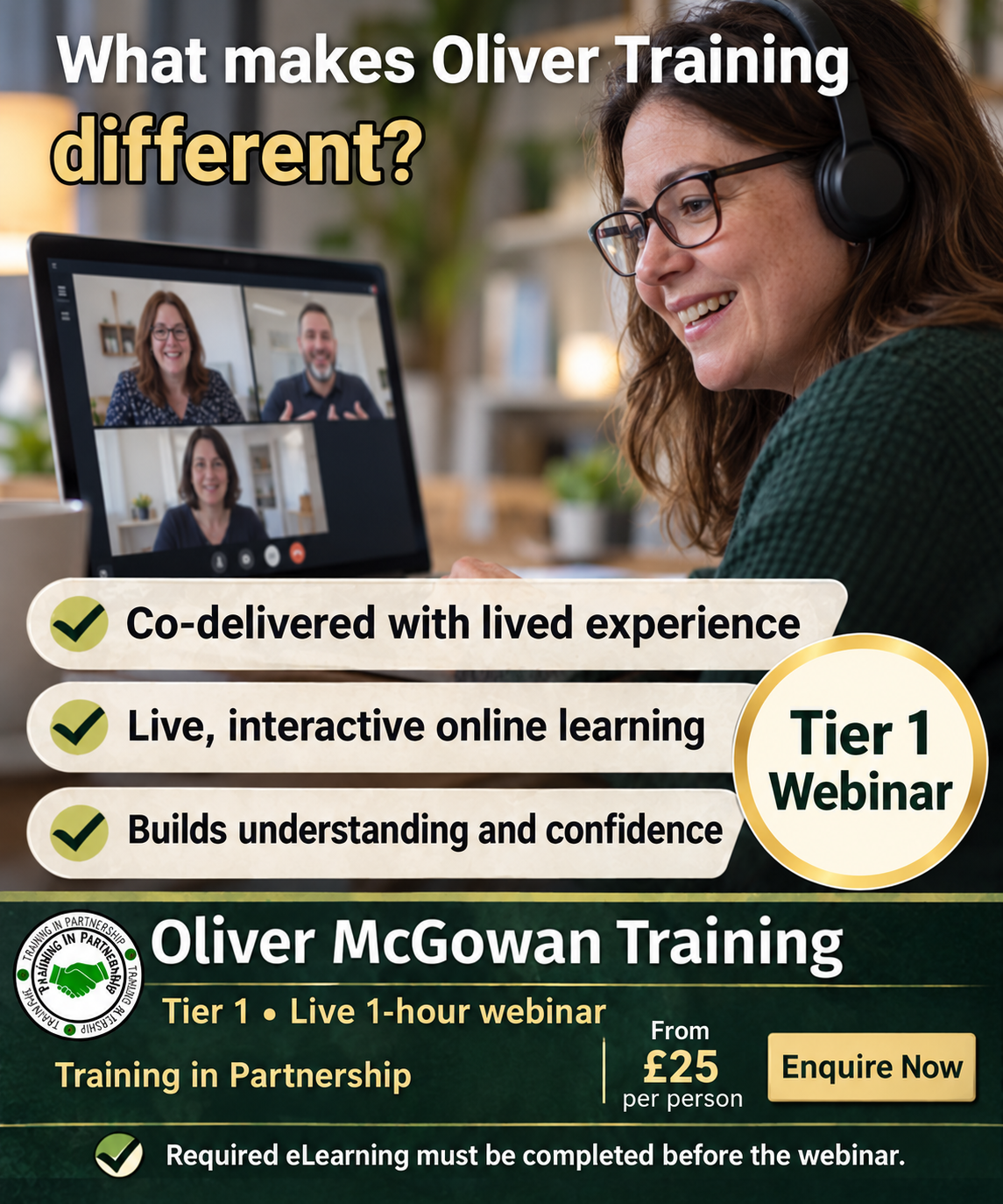
Tier 1 is for staff who need general awareness of the support autistic people and people with a learning disability may need. It has two required parts:
- The Oliver McGowan eLearning module, taking approximately 90 minutes.
- A live, one-hour online interactive session involving a facilitator, an autistic co-trainer and a co-trainer with a learning disability.
Tier 2: care and support responsibilities
Tier 2 is for staff who may provide care, treatment or support. It also has two required parts:
- The same approximately 90-minute Oliver McGowan eLearning module.
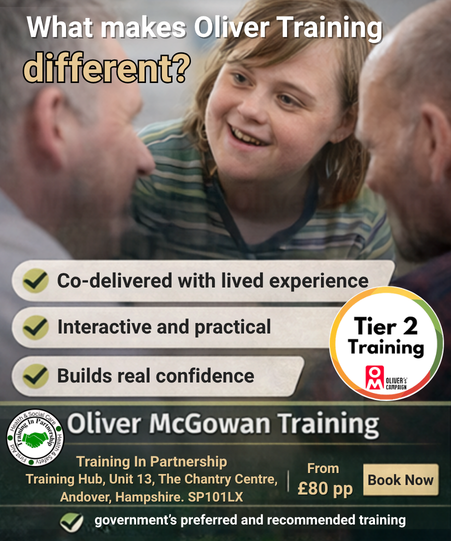
- A full day of face-to-face learning, with learning disability and autism sessions co-delivered with people with lived experience.
Choose the tier with your employer by considering what your role involves. A job title alone may not capture your responsibilities. Tier 2 includes the Tier 1 material: you do not need to attend the separate Tier 1 interactive session before completing Tier 2.
What does the learning cover?
Tier 1 develops understanding of learning disability, autism, reasonable adjustments and personal attitudes. Tier 2 builds on this through communication, health inequalities, rights and relevant law. The programme develops essential capabilities; it is not specialist training in diagnosis or treatment.
Common myths and misconceptions
“I have completed the eLearning, so I am fully trained.”
The eLearning is only part one. You must also complete the live interactive element for your tier. An eLearning completion record should not be recorded as completion of the whole programme.
“Everyone must do both tiers.”
Staff complete the package appropriate to their role. The common eLearning foundation should not be confused with completing the full Tier 1 package.
“This only applies if we run a specialist autism or learning disability service.”
People use many different services throughout their lives. CQC’s guidance makes clear that the duty applies across registered services and settings, rather than only specialist provision.
“Tier 2 can be completed entirely online.”
The national Tier 2 package requires the live training day to take place face to face. A recorded webinar is not a substitute for its in-person component.
“A certificate means every training need has been met.”
Some roles need additional learning beyond this programme. Employers must assess those needs and support staff to apply learning in practice.
“It is a one-off course.”
The Code expects training to be repeated at least every three years, or sooner when responsibilities change or a learning need is identified.
The full requirements: an employer checklist
The Code’s four standards cover an appropriate minimum curriculum, applying learning at work, live learning co-produced and co-delivered with people with lived experience, and evidence-based, quality-assured training.
- Assess each staff member’s learning needs and select the appropriate tier.
- Arrange both parts, including protected time and any participation adjustments.
- Check the provider’s current approval/accreditation and quality assurance arrangements.
- Identify additional role-specific learning.
- Record completion accurately, monitor uptake and evaluate changes in practice.
- Plan repeat training and reassess needs when roles change.
A family member’s contribution is valuable, but cannot replace the required autistic co-trainer or co-trainer with a learning disability. Use the full Code, linked below, when planning compliance.
Preparing for training with Training in Partnership
Complete the eLearning before attending and follow your booking instructions about evidence of completion. Let us know about communication, sensory or accessibility adjustments that would help you participate.
Our advertised split-session Tier 2 courses in Andover spread the face-to-face day across two half-days. Both sessions are required: check the complete pair of dates and times before booking. When discussing examples, protect the confidentiality of people you support.
Afterwards, choose a practical action to discuss with your team—for example, reviewing how you ask about communication preferences or how someone requests an adjustment.
Find the right training for your team
View our upcoming Tier 2 courses or contact Training in Partnership to discuss your requirements, including enquiries about Tier 1.
Official guidance and further reading
- Department of Health and Social Care: final Oliver McGowan Code of Practice
- CQC: training staff to support autistic people and people with a learning disability
- NHS England: accessing Oliver’s Training
- NHS Training Hub: understanding the two tiers
Guidance checked October 2026. This guide concerns the requirements in England; employers should read the full official guidance when making training decisions.